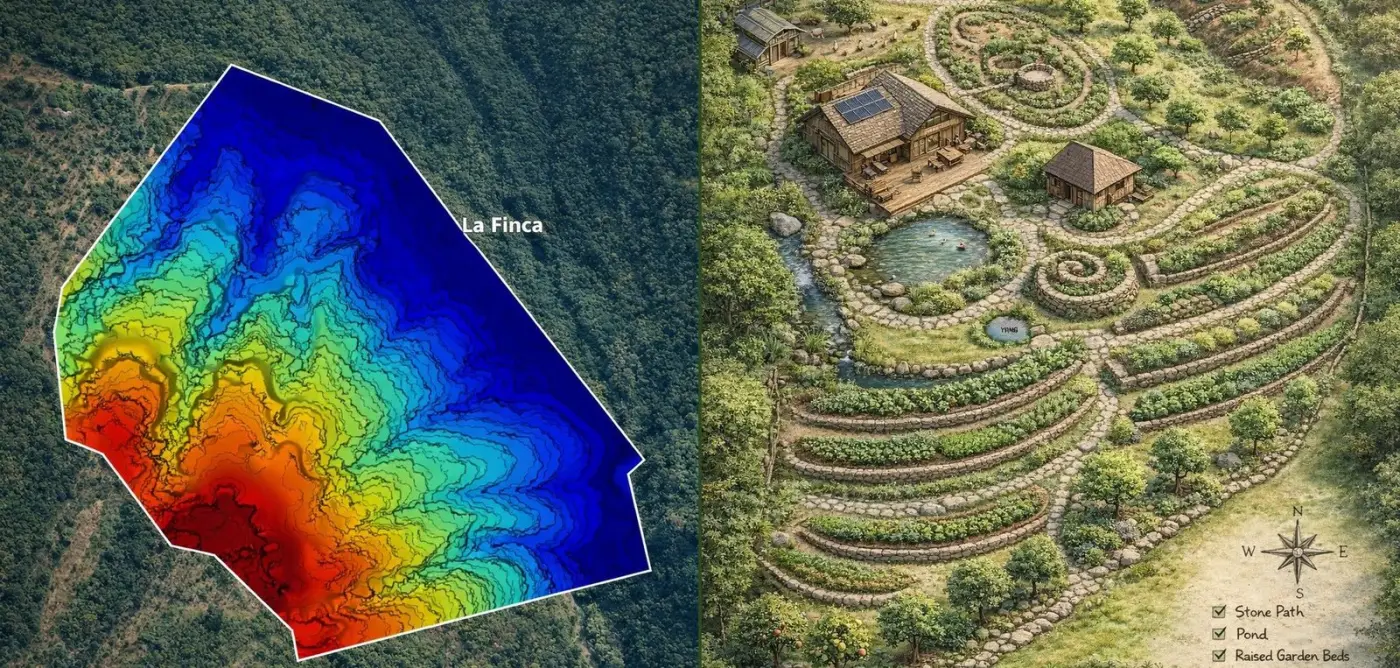
 The same land the design side reads. The data side keeps the record of it.
Ourcelium is the data half of the practice, and it answers to both halves of the collective: the design side and the hospitality side reach it from opposite directions and hit the same system. One system, on hardware you own, in a building you control, that takes over the work you currently rent by the month. It keeps running when the line goes down, and nothing on it can be repriced by somebody else.
The same land the design side reads. The data side keeps the record of it.
It happens the same way every time. A tool here, a seat there, a service to hold the photographs, another to hold the books. None of it was a decision, and all of it renews. Meanwhile the thing those tools hold, your records, your readings, your history of the place, lives on somebody else’s hardware under somebody else’s terms.
Water, food and data are the three we secure. This is the third one, and it is the one people are most surprised to find they do not own.
These are the categories a build of this kind takes over. Not all of them apply to anyone, and the point is not to replace all of them at once. The point is that the list is longer than anyone expects when they first write it down.
File storage, photographs and video, passwords, private networking, streaming for film and music, books and audiobooks, notes, mail and calendar, budgeting, recipes and meal planning, health tracking, editing tools, an AI assistant, doorbell and camera footage, backup, your own site and domains, and the small smart-home fees nobody remembers agreeing to.
The productivity suite, team storage, books and payroll, the CRM, project management, chat and video, mail marketing, the website, commerce and point of sale, inventory, scheduling and bookings, signatures, events and catering, food safety, farm management, sensor monitoring, design tools, automation, team passwords, device security, backup, hosting and compute, AI spend, analytics, help desk, HR and time, phones, documents and media.
A build does not have to swallow the whole list to pay for itself. Most operations find that four or five categories carry the majority of the monthly bill.
Three shapes of build, and the honest answer is that most people are the middle one. What a build costs depends entirely on what it has to carry, so it is quoted after the read rather than guessed at from a page.
Every land project starts with a site read: the water, the wind, the soil, before a single line is drawn. This is the same read, pointed at your digital operation. What you own, what you rent, what breaks, and what it costs you every month.
The first read is free, and it is a conversation rather than a form. What comes back is written: what to keep, what to retire, and what to build first.
The machine lives in your building, on your power, on your network. That is the whole point, and it is the part people want to talk about once they realise it is possible. Getting off the cloud is not an ideology here. It is what makes the thing keep working when the line goes down, and what stops a price rise somewhere else becoming your problem.
Three kinds of operation ask for this, and they ask for different things. A business wants its tools to stop being twelve subscriptions that do not speak to each other. Land development wants the readings, the drawings and the record of what was built, held somewhere that outlives the project and the contractor. Food production wants what came off the ground, what it cost to grow, where it went and what it sold for, in one place rather than four notebooks and a spreadsheet.
The shape changes with the operation. A design client wants site readings, drawings and a record that outlives the project. A hospitality operator wants bookings, stock and a till that does not stop. Same system underneath, pointed at a different problem.
We do not build software from scratch. We take the mature, open-source tools that industry already runs — the same names in serious data centres and serious homelabs — and assemble them into one coherent system on hardware that lives on your property. Nothing here is proprietary, and nothing is welded in: every service is a replaceable module, so a piece can be swapped without touching the rest. This is a representative slice of what we run today, chosen and sized per client.
A build does not have to run all three layers. Most operations carry the foundation layer plus whichever of the other two matches what they actually do — a household or business stops there, a working farm adds the field layer on top.
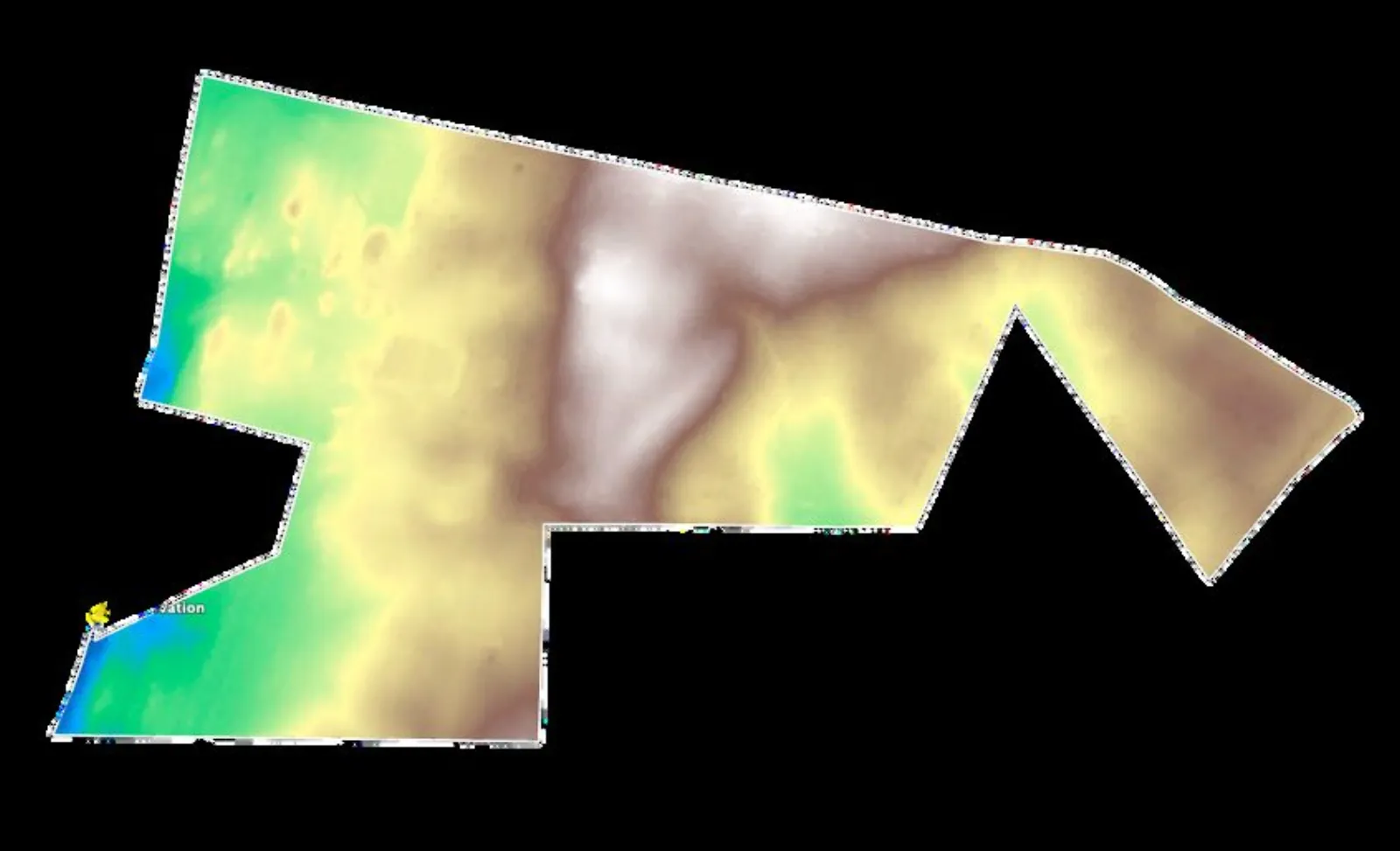 Held on hardware you own, in a building you control.
Tell us what you are running now. The first read is free and it takes under two minutes to ask for.
We read every note. Expect a reply from the collective soon.